Discover the secret history of Westbourne’s beautiful Victorian arcade, built in 1884–85 as the Bournemouth suburb began to grow. Learn why its grand shopping development initially struggled to attract traders, uncover the meaning behind its Gothic arches and carved details, and discover how its glass roof survived wartime damage. More than 140 years later, Westbourne Arcade remains home to a distinctive collection of independent shops and creative businesses.
17th July 2026
Westbourne Arcade | Bournemouth History and Heritage | Dorset Lifestyle
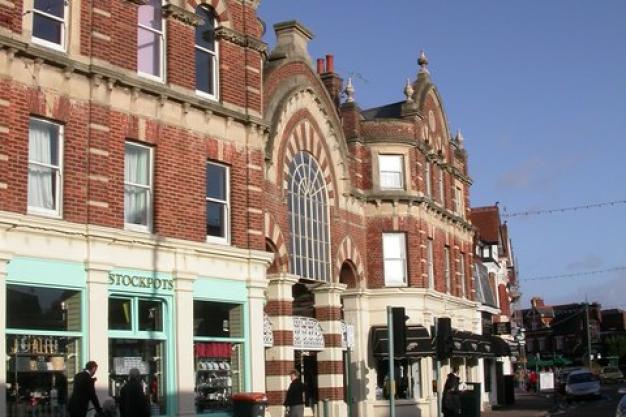
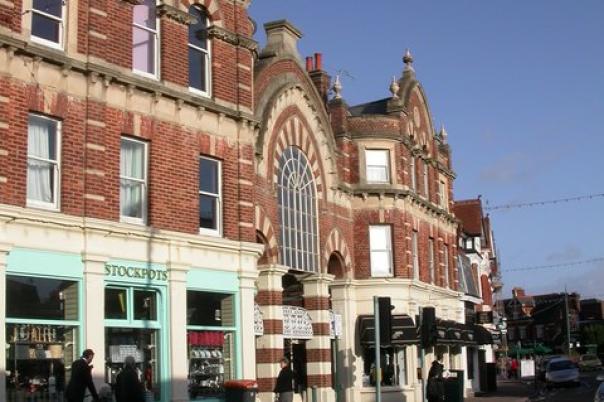
Westbourne Arcade is one of Bournemouth’s most beautiful Victorian buildings, but its history is filled with unexpected stories. Built during the 1880s as Westbourne began transforming into a fashionable suburb, the arcade initially struggled to attract businesses. Look beyond its independent shops and we can still find Henry Joy’s initials, Gothic stonework, curious carved faces and reminders of the wartime explosion that shattered its magnificent glass roof.
Most of us have walked through Westbourne Arcade while shopping or taking a shortcut between Poole Road and Seamoor Road. Yet how often do we stop and look above the shop windows?
Hidden among its patterned brickwork are carved faces, Gothic arches and the initials of the Victorian developer who created it. Even the gentle curve of its passageway tells part of a story stretching back more than 140 years.
During the early 1880s, Westbourne was changing quickly. New homes were appearing across what was still a relatively young suburb, creating an opportunity for an ambitious new shopping development.
The man behind it was Henry Joy. Originally a journeyman carpenter from Chalbury near Wimborne, Joy became one of Victorian Bournemouth’s most successful property developers. His other projects included Bournemouth’s central arcade between Old Christchurch Road and Gervis Place.
Westbourne Arcade was constructed during 1884 and 1885. Although it is often described simply as being “designed by Henry Joy”, contemporary accounts offer a little more detail: Joy was its owner and developer, while the architectural drawings were produced by Bournemouth architect H. E. Hawker.
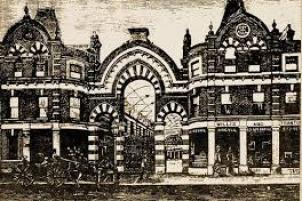
The development reportedly cost £18,000, an enormous investment at the time, and contained 24 shops and houses facing a central covered walkway. Each unit included a basement, shop level and accommodation above, creating an early version of the live-and-work spaces returning to popularity today.
We might expect such an elaborate Victorian development to have opened with speeches, crowds and considerable local attention. Instead, Westbourne Arcade arrived remarkably quietly.
There appears to have been no grand public ceremony. The Bournemouth Guardian did not report its opening, while another local publication gave the arrival of its first business just a single sentence.
That first shop, a branch of Willis and Trantum’s Argyll Co-operative Stores, opened in January 1885. It sold everything from groceries and medicines to wine, household goods and “toilet requisites”.
The arcade was not an immediate success. By the end of 1885, only five of its 24 shops were occupied. Westbourne was still developing and lacked the established footfall of central Bournemouth, reportedly forcing Joy to offer incentives to prospective traders.
His gamble eventually paid off. By 1890, the arcade was thriving.
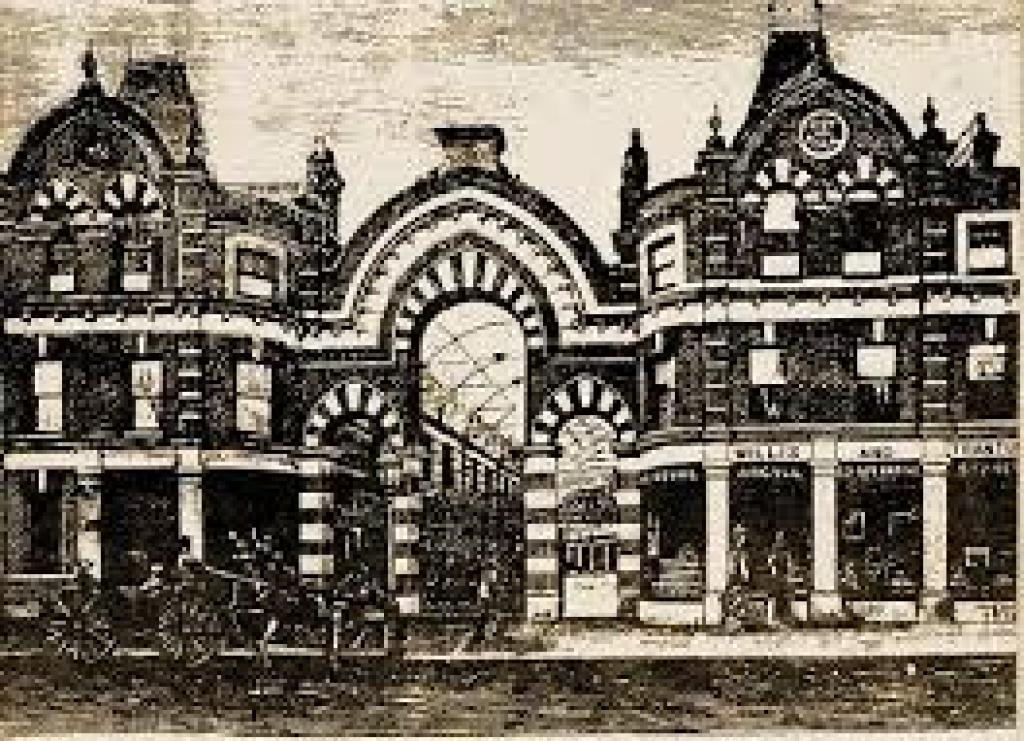
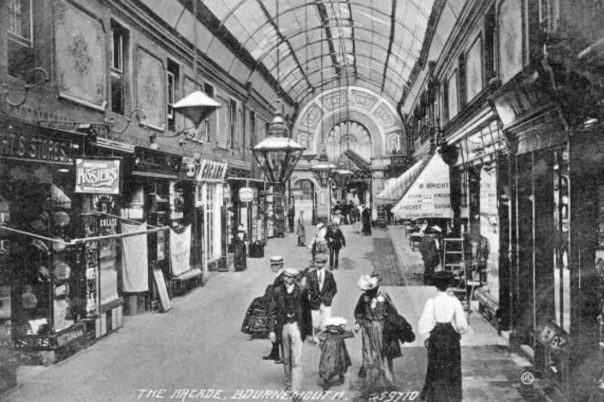
The variety of businesses inside the early arcade was extraordinary. Shoppers could buy dairy products, fresh vegetables, flowers, clothing, jewellery, books, furniture and confectionery without stepping outside.
There was a hairdresser, cabinetmaker, carpenter, upholsterer and china dealer. One unit even housed the Westbourne and East Dorset Conservative Club. In many ways, the arcade operated as a complete miniature high street protected from the weather.
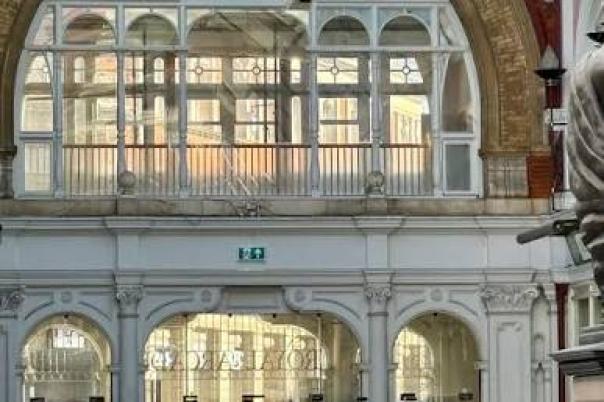
That glass roof was central to its appeal. It allowed natural light into the passage while sheltering Victorian shoppers from rain. A canopy later extended over the Poole Road entrance, protecting customers as they stepped down from their carriages.
Westbourne Arcade is now Grade II listed and officially recognised as a well-preserved example of a polychrome Gothic shopping arcade.
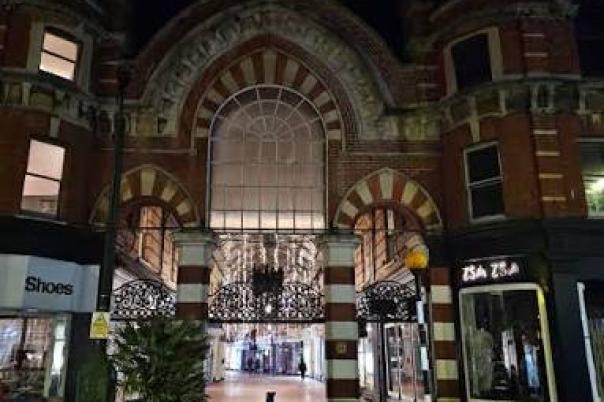
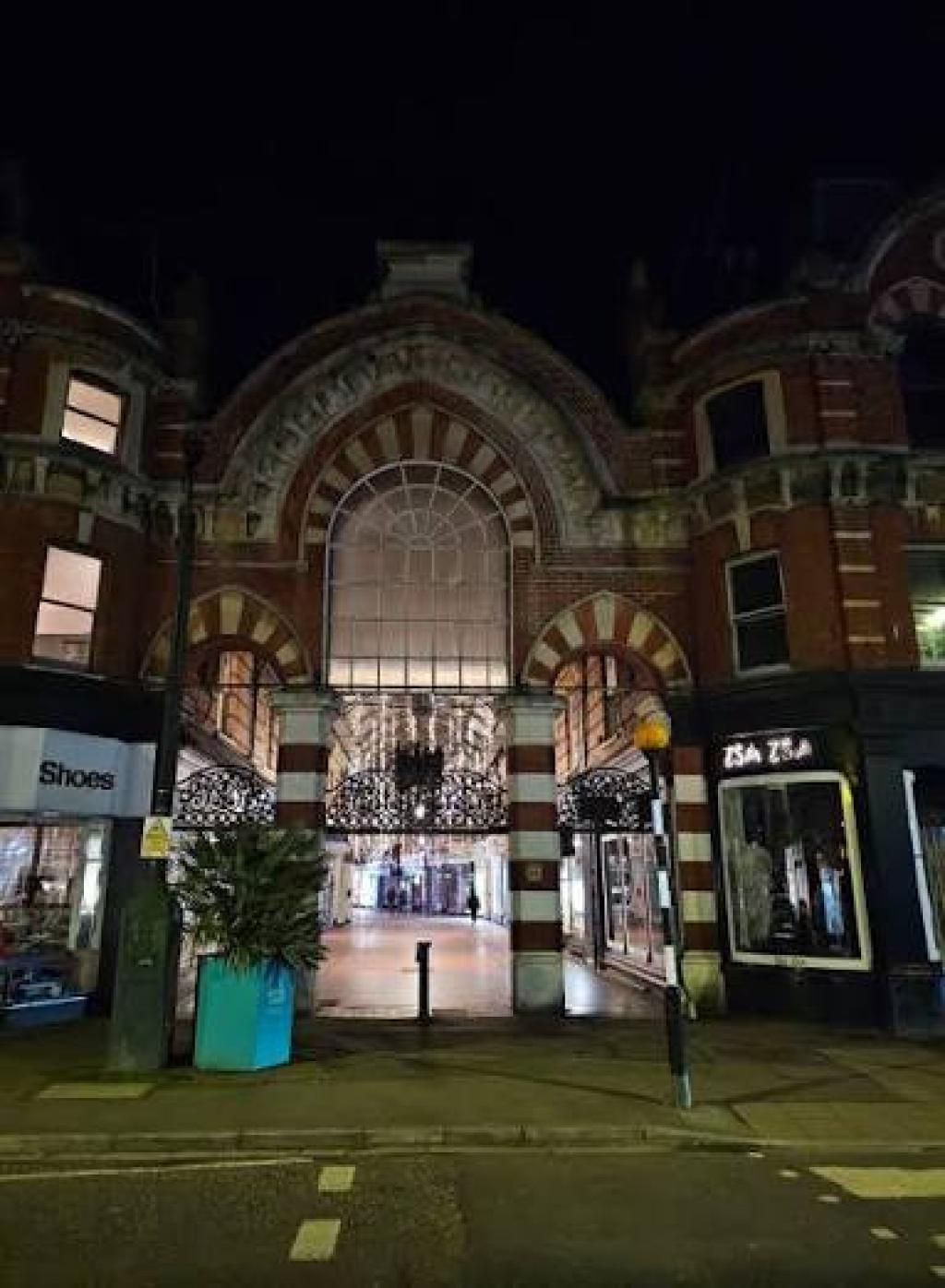
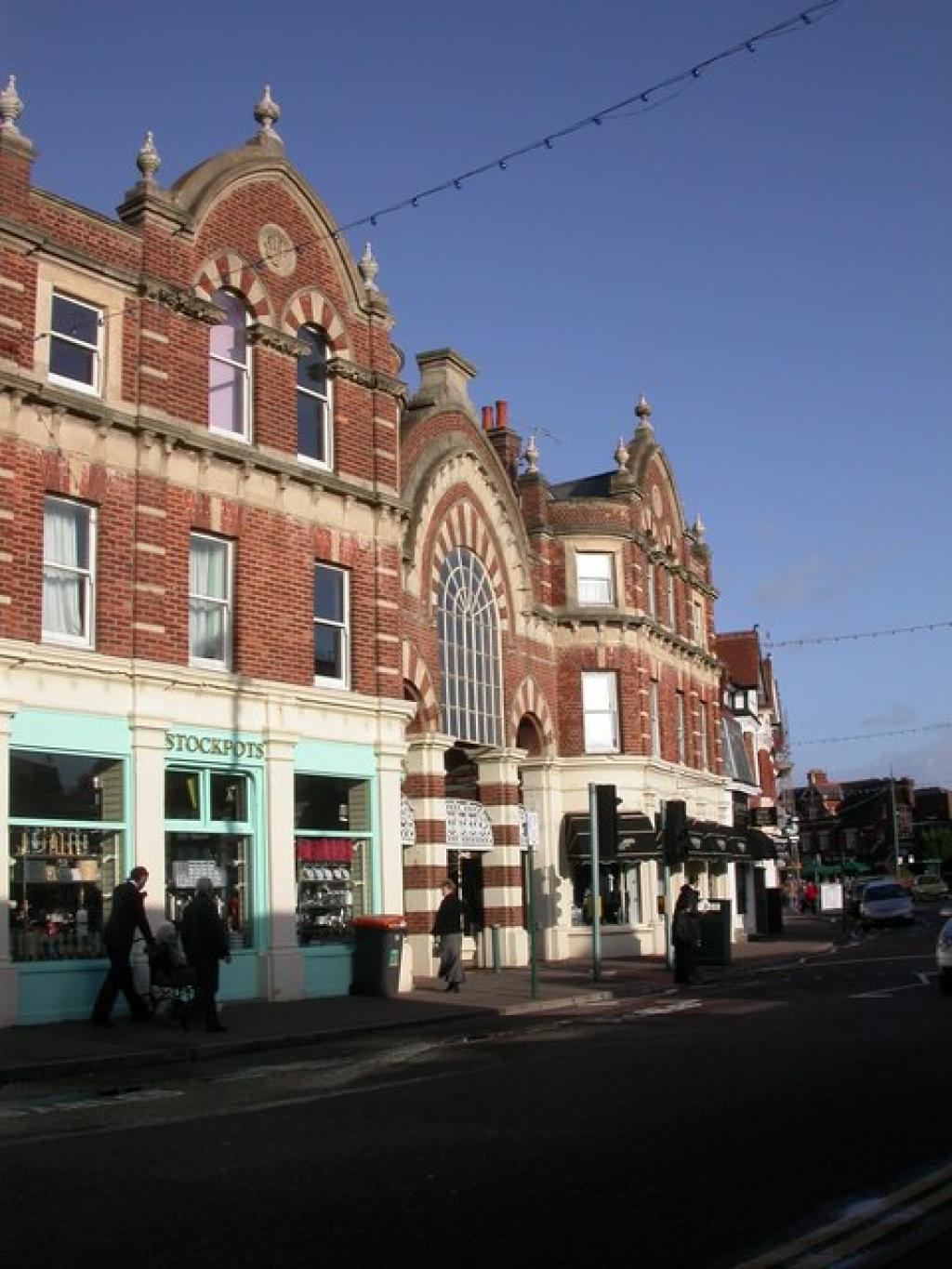
Its symmetrical entrances are constructed from red brick with contrasting stone dressings. Three rounded arches frame each entrance, while alternating bands of brick and stone create the striped effect that gives the building much of its character.
Inside, the passage curves gently beneath a glazed roof supported by decorative ironwork. Criss-crossing tie beams meet at large foliage-shaped bosses, while curious carved heads peer down from the cornice. Gargoyle-like figures positioned near the drainpipes are traditionally said to represent water gods.
Henry Joy also ensured that nobody would forget who created the arcade. His name and the date 1884 are carved prominently inside its entrance arches, while an “HJ” monogram appears within the external stonework.
These details are easily missed when we are concentrating on the shops, but once noticed, they completely change the way the building feels.
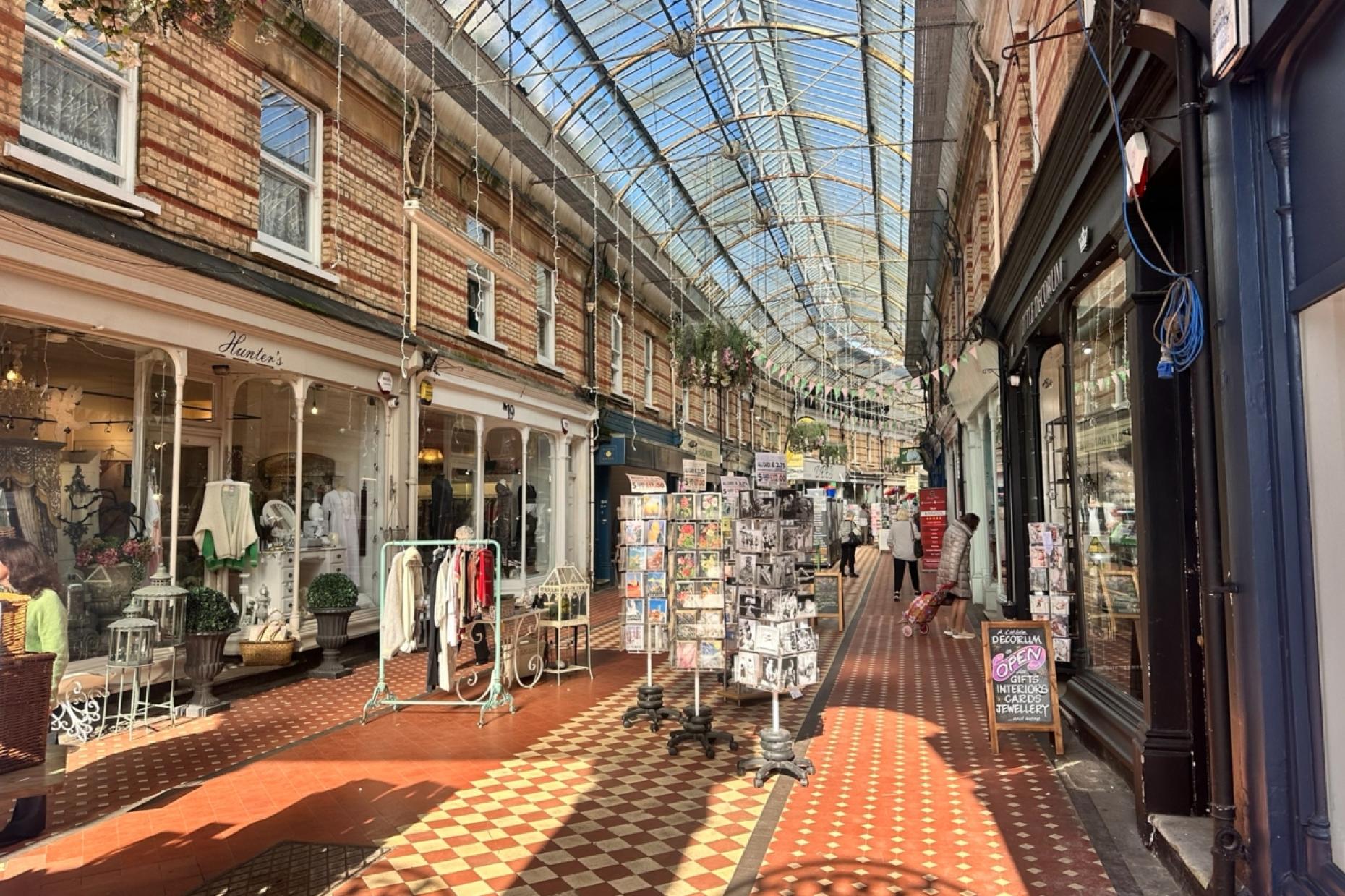
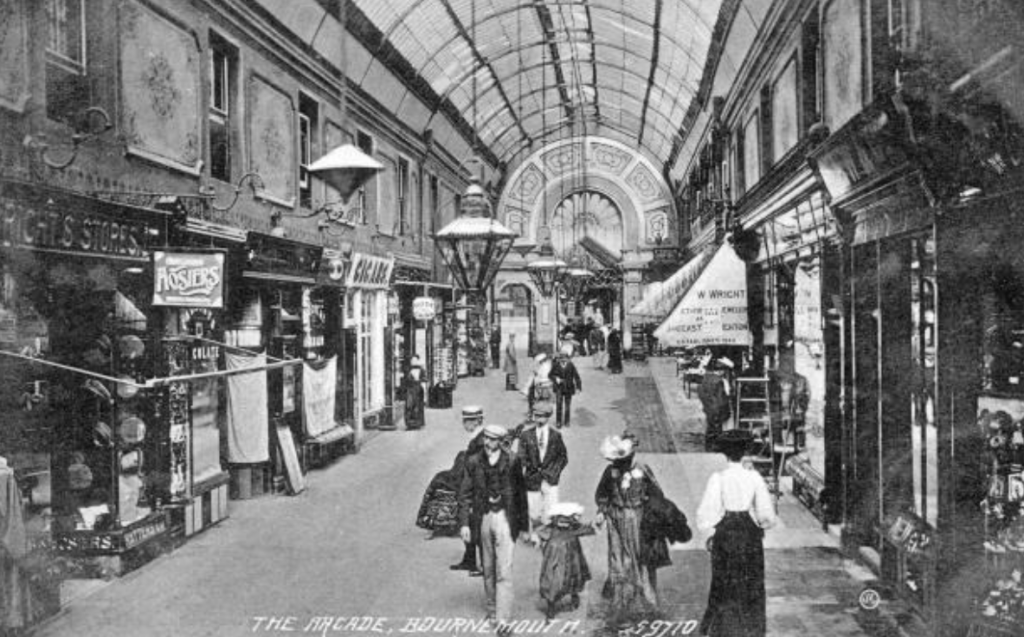
During its earlier years, the arcade even had its own beadle responsible for maintaining order.
Mr Clayton, remembered by Westbourne residents from the early 20th century, apparently began his mornings by cleaning the passageway before changing into a distinctive uniform complete with a gold-braided peaked cap.
He strictly enforced the arcade’s rules. Children who misbehaved risked a reprimand, while anyone attempting to push a bicycle through the passage could expect to be turned around. Within this small covered world, the beadle was the closest thing to its own police force.
The most dramatic moment in the arcade’s history came during the Second World War when a bomb exploded in nearby Robert Louis Stevenson Avenue.
The blast shattered almost all the glass in the arcade’s roof. Remarkably, its main structure escaped serious damage, allowing the glazing to be replaced after the war.
Other original features disappeared more gradually. The old iron entrance gates were removed in 1972 after becoming rusted and damaged, while the carriage canopy at the Poole Road entrance was also lost. In 1976, the arcade was granted Grade II-listed status, helping to protect its surviving historic character.
The businesses have changed many times since Victorian shoppers arrived for groceries and patent medicines, but the arcade continues to fulfil its original purpose.
Its independent character is particularly visible in businesses such as Courtenay’s Fine Art, a family-run gallery offering original paintings and limited-edition works, and Overbury’s Fine Art Supplies, which stocks professional materials for local artists. Longstanding shops such as Don Strike Music add another layer to the arcade’s story.
That continuity is what makes Westbourne Arcade special. It is not a preserved Victorian exhibit or a building admired only from a distance. It remains a working shopping passage where art, music, gifts and everyday essentials are sold beneath the same Gothic arches created more than 140 years ago.
The next time we pass through, it is worth slowing down. Look for Henry Joy’s initials, follow the ironwork across the roof and find the strange faces watching from above. Westbourne Arcade has never displayed its history loudly, we simply have to remember to look up.


 Spanish
 Chinese (simplified)
 Dutch
Dutch French
 German
 Italian
 Norwegian
 Polish
 Romanian
 Russian